
The best spot for your Monstera: light, temperature, and more
The location is the most important factor for a healthy Monstera. If your Swiss cheese plant is in the wrong spot, you'll quickly notice: yellow leaves, slow growth, or burnt leaf parts. But where does a Monstera prefer to be? We explain this in this article.
Ideal Monstera location — per window direction
Window direction
Suitable?
Advice
North
⚠️ Moderate
Possible, but growth is slower. Place directly in front of the window.
East
✅ Ideal
Gentle morning sun, perfect indirect light the rest of the day.
South
✅ Good
2-3 meters from the window or with sheer curtains. Not in direct sun.
West
✅ Good
1-2 meters from the window. Avoid afternoon sun.
How much light does a Monstera need?
In nature, the Monstera grows as undergrowth in tropical forests — it is accustomed to filtered, indirect light. In the home, this means a bright spot where no direct sunlight falls on the leaves. The ideal light intensity is 10,000-20,000 lux, which corresponds to a spot 1-3 meters from a large window.
Too little light can be recognized by smaller leaves without holes, longer stems, and sparse growth. Too much direct light causes brown, scorched spots on the leaves.
Temperature
The Monstera feels best at a temperature between 18 and 25°C — exactly what most living rooms are. Be careful that the temperature does not drop below 15°C at night, especially in winter when you turn down the heating. Avoid places next to radiators (too dry and too warm) and open windows or doors (drafts).
Humidity and location
Humid rooms such as the bathroom or kitchen are ideal for a Monstera, provided there is sufficient light. A bathroom with a window is the dream spot. In the living room, grouping it with other plants can help to increase local humidity.
Location per room
Living room: The most popular choice. Place your Monstera in a corner by the window, on a plant stand, or let it climb along a moss pole. Avoid placing it directly above a radiator.
Bedroom: Excellent. The Monstera purifies the air and most bedrooms have a stable temperature. Ensure sufficient indirect light.
Office: A Monstera does well in an office, provided there is daylight. With artificial light alone, growth will stagnate.
Hallway or corridor: Usually too dark for a Monstera, unless there is a large window or skylight.
🌿 View our Monstera collection
At XXLplant, you'll find the most beautiful and largest Monsteras, directly from the grower.
No, direct sun will burn the leaves. The Monstera needs indirect, filtered light. Gentle morning sun (before 10 AM) or winter sun is acceptable.
How do I know if my Monstera is getting enough light?
Look at the leaves: large leaves with many holes = sufficient light. Small leaves without holes, long thin stems = too little light. The plant also 'reaches' for the light if it doesn't get enough.
Can I rotate my Monstera?
Yes, rotate your Monstera a quarter turn every few weeks. This way, it grows evenly on all sides and each leaf gets enough light.
You've decided: you want to buy a Monstera. But how do you recognize a healthy specimen? What should you look for when ordering online? And what's a fair price? In this buying guide, we share everything you need to know before purchasing a Monstera.
Monstera buying guide — quick overview
Factor
What to look for
Leaves
Deep green, firm, no yellow or brown spots
Stem
Firm, no soft or brown areas
Roots
Visible aerial roots = healthy plant
Pests
Check underside of leaves for thrips, mealybugs, spider mites
Holes in leaves
More holes = older and healthier specimen
Pot size
ø19-24 (medium), ø27+ (XXL)
Price indication
Small €15-30 | Medium €30-60 | XXL €60-200+
What to look for when buying?
Healthy leaves
A healthy Monstera has deep green, shiny leaves without yellow or brown spots. A single yellowed lower leaf is normal during transport, but multiple yellow leaves indicate problems. Also check that the leaves feel firm — limp leaves can indicate water stress or root rot.
Check for pests
Turn the leaves over and inspect the underside. You don't want to bring small white fluffs (mealybugs), tiny spiders with webs (spider mites), or silver streaks (thrips) into your home. This applies to plants from a store as well as online orders — always check upon receipt.
Size and age
Larger Monsteras with many holes and fenestrations are older and more stable. They are more expensive, but you immediately have a mature plant with character. A younger plant is cheaper but doesn't have holes yet — these only appear over time. At XXLplant, we specialize in extra large specimens that make an immediate impact.
Buying online vs. in-store
Buying online has the advantage that you can choose from a wider range and the plant is delivered to your home. When purchasing online, pay attention to the following: is there a satisfaction guarantee? Is the plant safely packaged? Does the plant come directly from the grower (fresher!) or from a distribution center?
At XXLplant, all plants come directly from the grower. This means your plant arrives as fresh as possible, often with our own courier service for the largest specimens.
Which size Monstera should you choose?
That depends on your space and patience. A small Monstera (pot size ø12-17) is affordable but will take years to become impressive. A medium specimen (ø19-24) is a good balance between price and impact. An XXL Monstera (ø27+) is an immediate showstopper — perfect if you don't want to wait.
🌿 View our Monsteras — from medium to XXL
At XXLplant, you'll find the most beautiful and largest Monsteras, directly from the grower.
View Monsteras →
Frequently Asked Questions
How much does a large Monstera cost?
A Monstera of 100-150 cm costs an average of €50-100. A true XXL specimen (150+ cm) can go up to €80-120+, depending on the supplier and quality.
Can I order a Monstera online?
Yes, and it's now the most popular way to buy plants. Choose a webshop that delivers directly from the grower for the freshest plants. At XXLplant, large plants are even delivered with their own courier service.
When is the best time to buy a Monstera?
Spring (March-May) is ideal: the plant then begins its growing season and can easily adapt to a new environment. But a healthy Monstera can be purchased all year round.
It's no wonder the Monstera is a favorite of interior designers and office architects. With its large, graphic leaves, it instantly brings ambiance and life to any workspace. But is the Monstera also suitable as an office plant? Absolutely – and in this article, we'll tell you exactly why and how.
Monstera as an office plant — advantages
Advantage
Explanation
Air-purifying
Filters formaldehyde and other harmful substances
Stress-reducing
Research shows that plants reduce workplace stress
Sound-absorbing
Large leaves absorb sound in open-plan offices
Low maintenance
Survives forgotten watering on the weekend
Ambiance creator
Tropical look, suits any interior style
Productivity
Studies show 15% higher productivity with plants
Why the Monstera is perfect for the office
An office environment is surprisingly suitable for a Monstera. The temperature is stable all year round (20-22°C), there is usually enough indirect daylight, and the plant easily survives a weekend without water. Moreover, the Monstera is air-purifying: it filters harmful substances from the air released by furniture, carpets, and printers. In an office with many people, that is a serious advantage.
Which size for which space?
Desk or workstation: A compact Monstera Adansonii (Monkey Leaf) fits perfectly on or next to a desk. The hanging tendrils provide a playful effect without taking up too much space.
Meeting room: A medium Monstera Deliciosa (100-130 cm) is a beautiful eye-catcher in a meeting room. Place it in a corner by the window.
Entrance or lobby: Here you want to make an impact. An XXL Monstera of 150 cm or taller immediately impresses visitors and clients. At XXLplant, we deliver these extra large specimens directly to the office – including safe delivery with our own courier service.
Open-plan office: Use large Monsteras as natural room dividers. They dampen sound and create visual separation without closing off the space.
Office care
Office care is hardly different from home care. A few points to note: assign someone as the plant manager (prevents no one from watering or everyone from watering). Keep the plant away from air conditioning – the cold, dry airflow is detrimental to tropical plants. And schedule a short pest inspection once a month.
Interior styles with Monstera
The Monstera fits almost any interior style. In a modern, minimalist office, a single large Monstera in a sleek white pot is sufficient. In a bohemian or jungle-style, combine multiple Monsteras with other tropical plants. In a Japandi interior, choose a Monstera in a natural basket or terracotta pot.
Monstera for the office? Check out our office plants
At XXLplant, you'll find the most beautiful and largest Monsteras, directly from the grower.
View Monsteras →
Frequently Asked Questions
Can a Monstera survive with only artificial light?
That's difficult. A Monstera needs at least a few hours of indirect daylight daily. With only artificial light, it hardly grows and loses its characteristic holes. A grow lamp can help.
How large does a Monstera grow in the office?
With proper care, a Monstera in the office can grow 2-3 meters tall. A moss pole helps the plant grow vertically and saves floor space.
How many Monsteras do I need for my office?
As a rule of thumb: 1 large plant per 10-15 m² for a noticeable effect on air quality and ambiance. For an open-plan office of 100 m², 6-10 large plants form a good basis.
You have a beautiful Monstera at home, but also a cat or dog that sniffs everything. The question many pet owners ask is: is Monstera toxic to pets? The short answer: yes, but there's nuance. Read on for all the facts.
Monstera Toxicity — Overview
Question
Answer
Toxic to cats?
Yes, mildly toxic
Toxic to dogs?
Yes, mildly toxic
Toxic to children?
Yes, upon ingestion
Toxic substance
Calcium oxalate crystals
Severity
Mild to moderate (rarely severe)
Symptoms
Mouth irritation, drooling, vomiting
Action upon ingestion
Call the vet
Why is Monstera toxic?
All parts of the Monstera contain calcium oxalate crystals. These microscopic, needle-shaped crystals are found in the leaves, stems, and roots. When chewed, these crystals are released and cause a burning, stinging sensation in the mouth, throat, and stomach.
Symptoms in cats
Cats are generally more curious about plants than dogs. If your cat nibbles on a Monstera, you can expect the following symptoms: excessive drooling, lip licking, vomiting, difficulty swallowing, and decreased appetite. In most cases, the symptoms are mild and short-lived, as the bitter taste and burning sensation deter the cat from ingesting large amounts.
Symptoms in dogs
Symptoms in dogs are similar: drooling, vomiting, pain in the mouth, and sometimes a swollen tongue or lips. Large dogs generally experience less discomfort than small dogs, simply due to the difference in body weight relative to the amount of plant ingested.
What to do if your pet eats Monstera?
Don't panic. Gently rinse your pet's mouth with water and remove any plant residue. Observe your pet for the next few hours. In most cases, the symptoms will subside on their own. Contact your veterinarian if symptoms persist for more than a few hours, your pet stops eating or drinking, or if you suspect a large amount of the plant has been ingested.
5 tips to keep your pets safe
1. Place the Monstera at a height. Put the plant on a high shelf, plant stand, or in a hanging pot out of your pet's reach.
2. Use a plant stand. A tall plant stand keeps plants out of reach and gives your interior a stylish look.
3. Spray with citrus scent. Cats don't like citrus scent. Lightly spray citrus spray on the pot or saucers.
4. Offer alternatives. Give your cat cat grass or catnip as a safe alternative to chew on.
5. Consider a pet-friendly plant. Do you have a pet that can't stay away from plants? Then check out our pet-friendly plant collection.
🌿 Also check out our pet-friendly plants
At XXLplant, you'll find the most beautiful and largest Monsteras, directly from the grower.
View pet-friendly plants →
Frequently asked questions
Can my cat die from eating Monstera?
That is highly unlikely. The calcium oxalate crystals immediately cause a burning sensation, which means animals almost never ingest large quantities. If in doubt, always contact your veterinarian.
Are all Monstera species toxic?
Yes, all Monstera species (Deliciosa, Adansonii, Variegata, etc.) contain calcium oxalate crystals and are therefore toxic to pets.
Which large houseplants are safe for pets?
Safe alternatives include the Kentia Palm, Areca Palm, and Banana Plant (Musa). Check out our pet-friendly collection for more options.
Is your plant unwell?
Pick your plant and the symptom, and our Plant Doctor gives you an instant free diagnosis with a step-by-step plan.
Prachtige bananenplant ontvangen. Groot, frisgroen blad en duidelijk van goede kwaliteit. Hij werd stevig verpakt geleverd en kwam zonder schade aan.
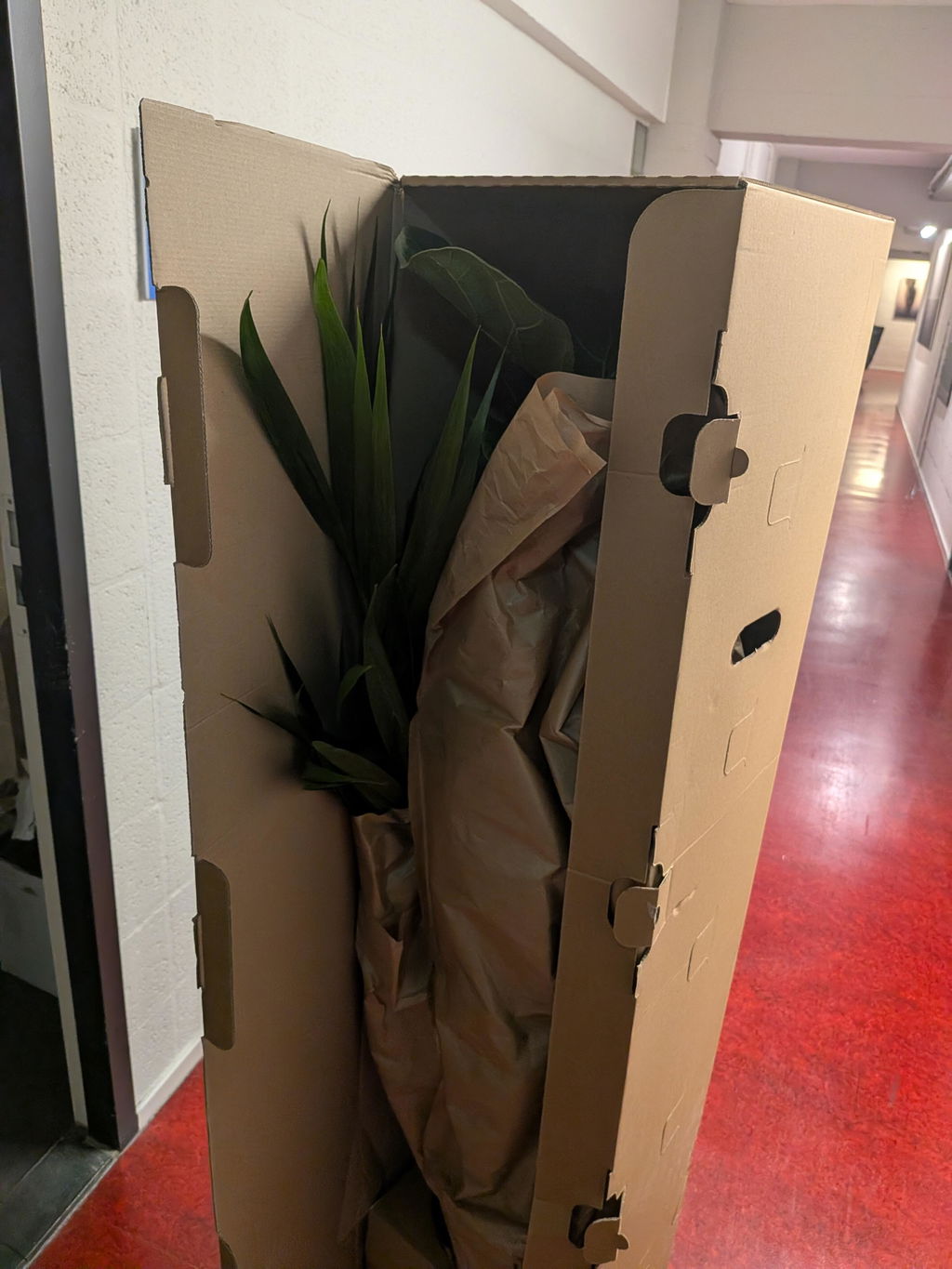
De plant staat hier in op kantoor en geeft meteen veel sfeer. Verzorging is tot nu toe eenvoudig en hij oogt erg gezond. Zeer tevreden over de kwaliteit en service. Zeker een aanrader om hier te bestellen. Ik had 3 planten tegelijk besteld - alle 3 waren ze top.
De Ficus Lyrata is precies zoals verwacht. Mooie volle plant, gezond blad en netjes op hoogte. Hij kwam goed verpakt binnen en had geen beschadigingen.
Staat hier nu een paar weken op kantoor en doet het uitstekend. Duidelijke verzorging, geen gedoe. Prijs-kwaliteit klopt en de levering was snel. Ik zou hier zeker opnieuw bestellen.
Prachtige Kentia palm echt een goed website om planten te kopen!
Prachtige palm. Volle bladeren. 15cm hoger dan aangegeven (altijd goed). Geen dode punten, mooi groen. Werd geleverd in een op maat gemaakte kartonnendoos. Erg stevig - blij mee!