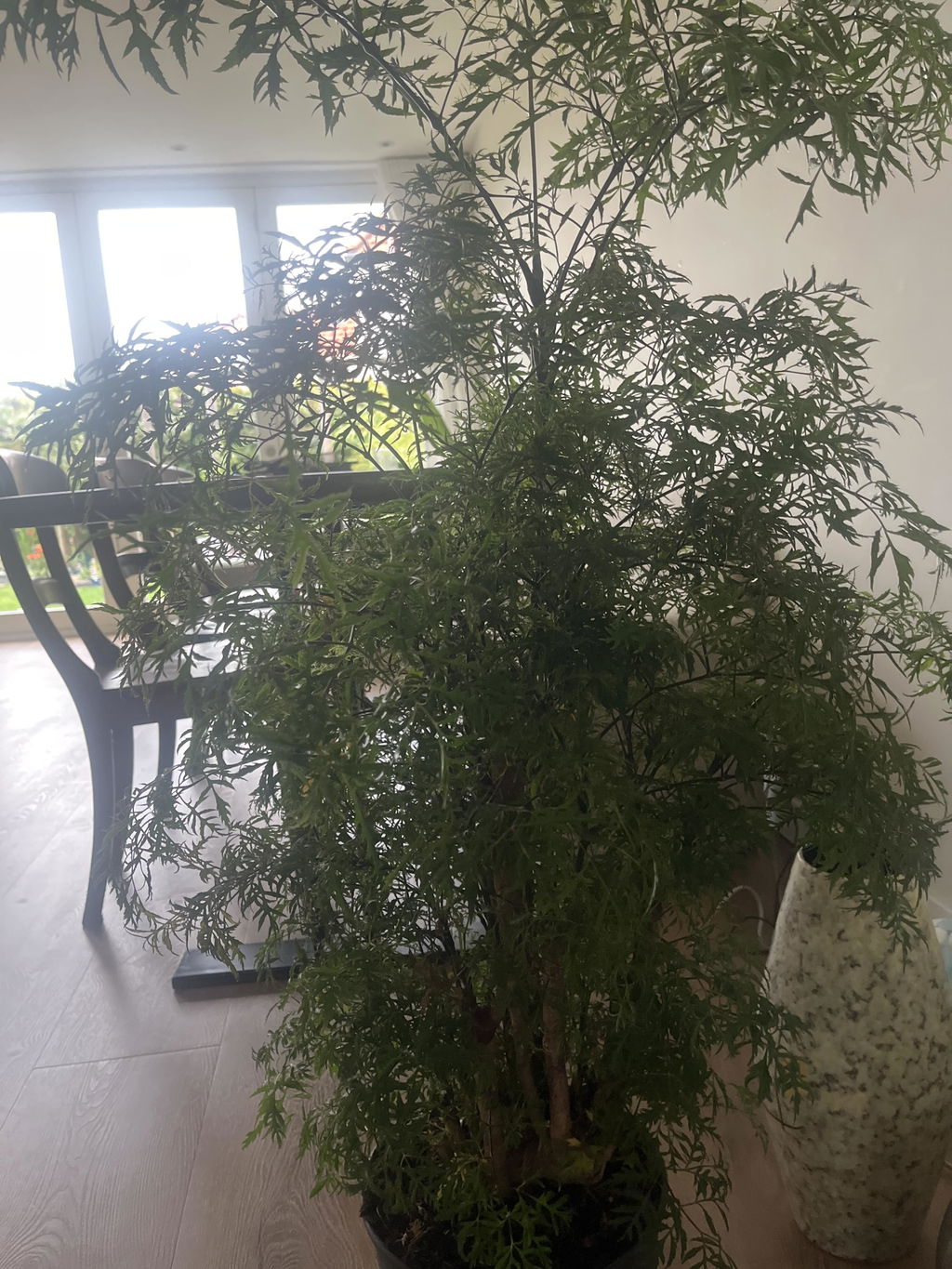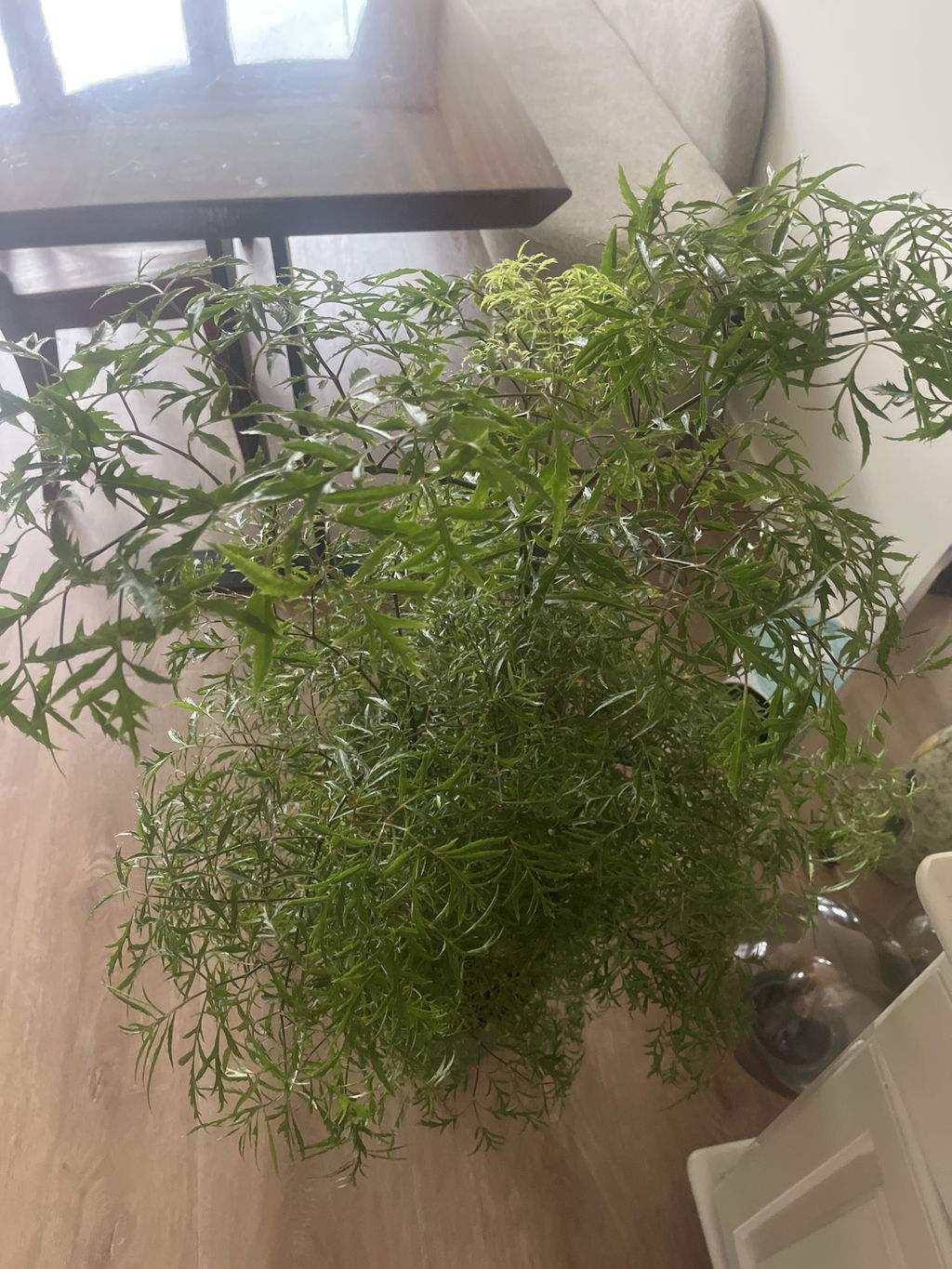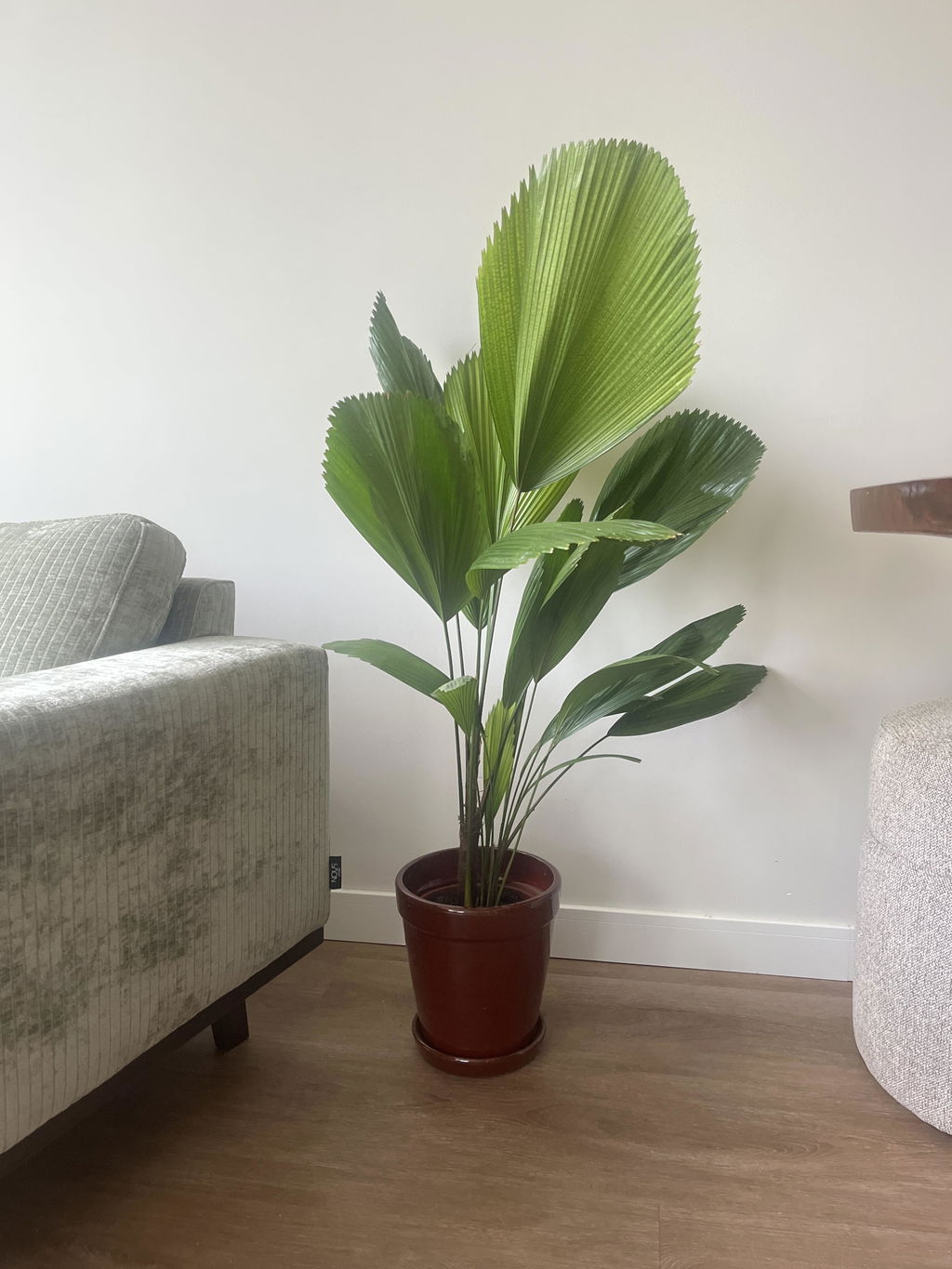



The Areca palm brings a touch of tropical holiday feeling into the home in no time. With its graceful, feathered fronds that fan out like green plumes, this is one of the most loved indoor palms. It looks lush and mature, yet asks surprisingly little: a bright spot, regular watering and a bit of attention to humidity. In this guide you will read exactly how to keep your golden cane palm healthy and green for years, from the right position to solving brown leaf tips. Want to go big straight away? Then take a look at our large Areca palms, which create atmosphere immediately.
The Areca palm in brief
Short on time? These are the key care points at a glance:
- Light: bright, indirect light. Avoid harsh midday sun, as it scorches the foliage.
- Water: keep the soil evenly moist. Not soaking wet, but not completely dried out either.
- Position: warm and out of draughts, preferably between 18 and 24 °C.
- Humidity: it likes humid air. Mist regularly or stand the pot on a tray of wet clay pebbles.
- Pet-friendly: yes, the Areca palm is not toxic to cats and dogs.
- Extra bonus: it is known as an air-purifying houseplant.
About the Areca palm and its origins
The Areca palm appears in the books as Dypsis lutescens and belongs to the palm family (Arecaceae). In everyday speech you often hear the name golden cane palm, a reference to the warm, golden-yellow glow the leaf stems and young fronds can take on. The plant originally comes from Madagascar, where it grows in a warm, humid climate along light forest edges under the canopy of larger trees.
That natural habitat immediately explains a lot about its preferences as a houseplant: it likes warmth, moisture and filtered light rather than fierce sun. The Areca grows upwards out of the pot on several thin, reed-like stems and forms a crown of fine, feathered leaflets. That makes it look full and graceful, even once it has reached a substantial height. Indoors a well-cared-for specimen can easily reach 1.5 to 2 metres.
Light and position
Light is decisive for a healthy Areca palm. It thrives best in a spot with plenty of bright, indirect light. Think of a place right by an east- or west-facing window, or a little further from a south-facing window so the direct midday sun just misses it. Too little light makes the plant sparse and limp, with long stems and little new foliage.
What you must avoid is harsh, direct midday sun. The fine leaflets then scorch and get dry, brown patches that will not recover. A light net curtain or a couple of metres' distance from the glass is often enough to prevent that.
The Areca is also sensitive to cold and draughts. Do not put it right next to a frequently opened outside door, a cold window or the airflow of an air conditioner. A warm, stable spot between 18 and 24 °C is ideal. Turn the pot a quarter turn now and then so the plant grows evenly towards the light on all sides and keeps a good shape. Larger specimens look best as a solitary plant in a bright living room or hallway. In our collection of large Areca palms you will find sizes that fill an empty corner straight away.
Watering
Watering is all about balance. The Areca palm wants evenly moist soil but does not tolerate waterlogging. Too wet is more dangerous than too dry: if the root ball stays soaking wet for long, root rot is lurking. At the same time the root ball must not dry out completely either, as the plant responds to that with brown leaf tips.
A reliable approach:
- Feel with your finger whether the top 2 to 3 cm of soil has dried out. If so, it is time to water.
- Then water generously, until it runs out of the bottom of the pot. Always pour excess water out of the saucer.
- In spring and summer (the growing season) the plant needs water more often, frequently once a week. In autumn and winter you water clearly less.
Preferably use lukewarm water at room temperature. The Areca is sensitive to substances in tap water, such as fluoride and salt, which over time can cause brown leaf tips. So let tap water stand overnight before watering, or use rainwater or filtered water if you notice the leaf tips turning brown.
Humidity
As a true tropical plant the Areca palm likes high humidity. In many homes, certainly in winter when the heating is on, the air is in fact very dry. That is also the most common cause of brown leaf tips. Fortunately there is an easy fix:
- Mist the leaves a few times a week with lukewarm, low-lime water.
- Stand the pot on a tray of wet clay pebbles or gravel, so the evaporating water keeps the air around it humid.
- Group the Areca with other plants. Together they create a more humid microclimate.
- Keep it away from radiators and stoves, which dry the air out further.
A pleasant side effect: higher humidity does not just make the plant more comfortable, it also keeps spider mite at bay. That small pest feels right at home in dry air.
Feeding
During the growing season, roughly from April through September, the Areca palm appreciates some extra feeding. Give a liquid feed for green houseplants dissolved in the watering water once every two to four weeks. Stick to the dosage on the packaging, or even keep it slightly on the frugal side.
Too much fertiliser is a common cause of brown leaf tips and a whitish salt deposit on the soil. Less really is more here. In autumn and winter, when the plant barely grows, you stop feeding. Have you just repotted your palm into fresh compost? Then wait two months before feeding, as new soil already contains plenty of nutrients.
Repotting, step by step
You repot a young, vigorously growing Areca on average every one to two years, and a larger specimen only when the roots are clearly growing out of the pot. Spring is the best moment, because the plant is then in growth mode and recovers quickly. Here is how to go about it:
- Step 1: Choose a pot about 2 to 4 cm wider than the current one. A far too large pot holds too much water and increases the risk of root rot.
- Step 2: Use free-draining compost. Special palm or green plant compost, optionally with a handful of perlite added, works fine.
- Step 3: Put a layer of clay pebbles in the bottom for drainage, especially if the pot has a closed base.
- Step 4: Carefully take the plant out of the old pot and loosen the root ball gently. Be gentle, as the roots are fine and fragile.
- Step 5: Set the palm at the same depth as before in the new pot and top up with fresh compost. Press the soil down lightly, but not too firmly.
- Step 6: Water calmly and put the plant back in its familiar, bright spot. Wait with feeding until the plant has settled in well again.
Brown tips and trimming leaves
Brown leaf tips are part of the Areca palm and occur at some point on virtually every specimen. You can happily trim them off neatly to make the plant look fresh again. Cut with clean, sharp scissors along the natural shape of the leaf, so the point of the leaflet is preserved. Leave a very thin brown edge rather than cutting into the healthy green; that looks calmer and prevents new brown patches at the cut edge.
Has an entire leaf stalk turned completely yellow or brown? Then cut it away right at the base. There is one thing you must never do, however: cut out the growing heart or the top. A palm grows from that central heart and cannot form a new top. If you remove it, growth on that stem stops for good. So always limit yourself to dead or damaged foliage.
Common problems
Is your Areca palm not responding as you hoped? It usually shows clearly what is wrong. Below are the best-known signals, with cause and solution.
Brown leaf tips
Cause: usually air that is too dry, sometimes too much fertiliser or substances in tap water such as fluoride and salt. A root ball that is too dry also plays a part.
Solution: raise humidity by misting and standing the pot on wet clay pebbles. Water with rainwater or tap water left to stand overnight, and be sparing with feed. Trim existing brown tips neatly along the leaf shape.
Yellow leaves
Cause: often too much water or a root ball that is too wet, sometimes a shortage of nutrients or light. A single lower leaf turning yellow and dying off is normal.
Solution: check that the pot drains well and let the soil dry out a little between waterings. If several leaves turn yellow at once, feed it during the growing season and move the plant to a brighter spot.
Spider mite
Cause: dry air. Spider mite is a minuscule mite that multiplies quickly in dry conditions. You recognise it by fine webbing between the leaflets and dull, yellow-speckled foliage.
Solution: rinse the plant off under the shower, raise humidity and wipe the leaves regularly. For stubborn infestations an organic product based on potassium salts, for example, helps. Higher humidity is at the same time the best prevention.
Root rot
Cause: persistently wet soil, causing the roots to rot. Often combined with a pot without drainage or water left standing in the saucer.
Solution: take the plant out of the pot and check the roots. Cut away black, soft roots and repot into fresh, free-draining compost. Water more carefully afterwards and always let excess water drain away.
Is the Areca palm toxic?
Good news for households with pets: the Areca palm is not toxic to cats and dogs. That makes it one of the nicest large houseplants if you have a curious cat or dog at home that occasionally nibbles a leaf. For most other small pets too the golden cane palm is considered safe.
That does not mean you should encourage your animal to eat it. Large amounts of plant material can cause stomach upset with any plant. But you do not need to fear the toxic reactions that some other popular houseplants can trigger. That makes the Areca palm a safe and atmospheric choice for the whole family. Feel free to look at our large Areca palms if you are after a pet-friendly eye-catcher.
The Areca palm and air purification
Besides its looks, the Areca palm has another fine quality: it is known as an air-purifying houseplant. Like many green plants it takes in carbon dioxide through its leaves and releases oxygen. Thanks to its large leaf surface and the evaporation of moisture it also contributes to a more pleasant, slightly more humid indoor climate.
Do not expect miracles from one plant in a large room, but a few substantial Areca palms together make a noticeable difference to the atmosphere and humidity in a room. Combine that with its pet-friendly character and you understand why the golden cane palm has been among the favourites of indoor palms for years.
Frequently asked questions about the Areca palm
How much water does an Areca palm need?
Keep the soil evenly moist. Water as soon as the top 2 to 3 cm of soil has dried out, in summer often about once a week and less in winter. Always let excess water drain away, as waterlogging leads to root rot.
Why is my Areca palm getting brown leaf tips?
Brown tips usually arise from air that is too dry. Too much fertiliser or substances in tap water such as fluoride and salt can also be the cause. Raise humidity, water with softer water and be sparing with feed. You can trim the existing tips neatly along the leaf shape.
Can the Areca palm stand in full sun?
Preferably not. The Areca likes plenty of bright, indirect light, but harsh midday sun scorches the fine foliage and causes dry, brown patches. A bright spot just outside the reach of direct midday sun is ideal.
Is the Areca palm toxic to cats and dogs?
No, the Areca palm is not toxic to cats and dogs. That makes it one of the safest choices for households with pets. Encouraging them to eat it is not wise, but the plant causes no toxic reactions.
Can I cut the top off my Areca palm?
No, never cut out the growing heart or top. A palm grows from that central point and will not form a new top. Only remove dead or damaged foliage and trim brown tips neatly along the natural leaf shape.
How often should I repot my Areca palm?
A young, fast-growing plant is repotted about every one to two years, a larger specimen only when the roots grow out of the pot. Do this in spring and choose a pot only a few centimetres wider than the previous one.
What is a good alternative to the Areca palm?
Do you like the palm look but want something tougher? Then the Kentia palm is a fine alternative. It tolerates a little less light and is somewhat less demanding when it comes to humidity. For a full, graceful and tropical effect, though, the Areca palm remains one of the very best choices.
7. FAQ_SCHEMA