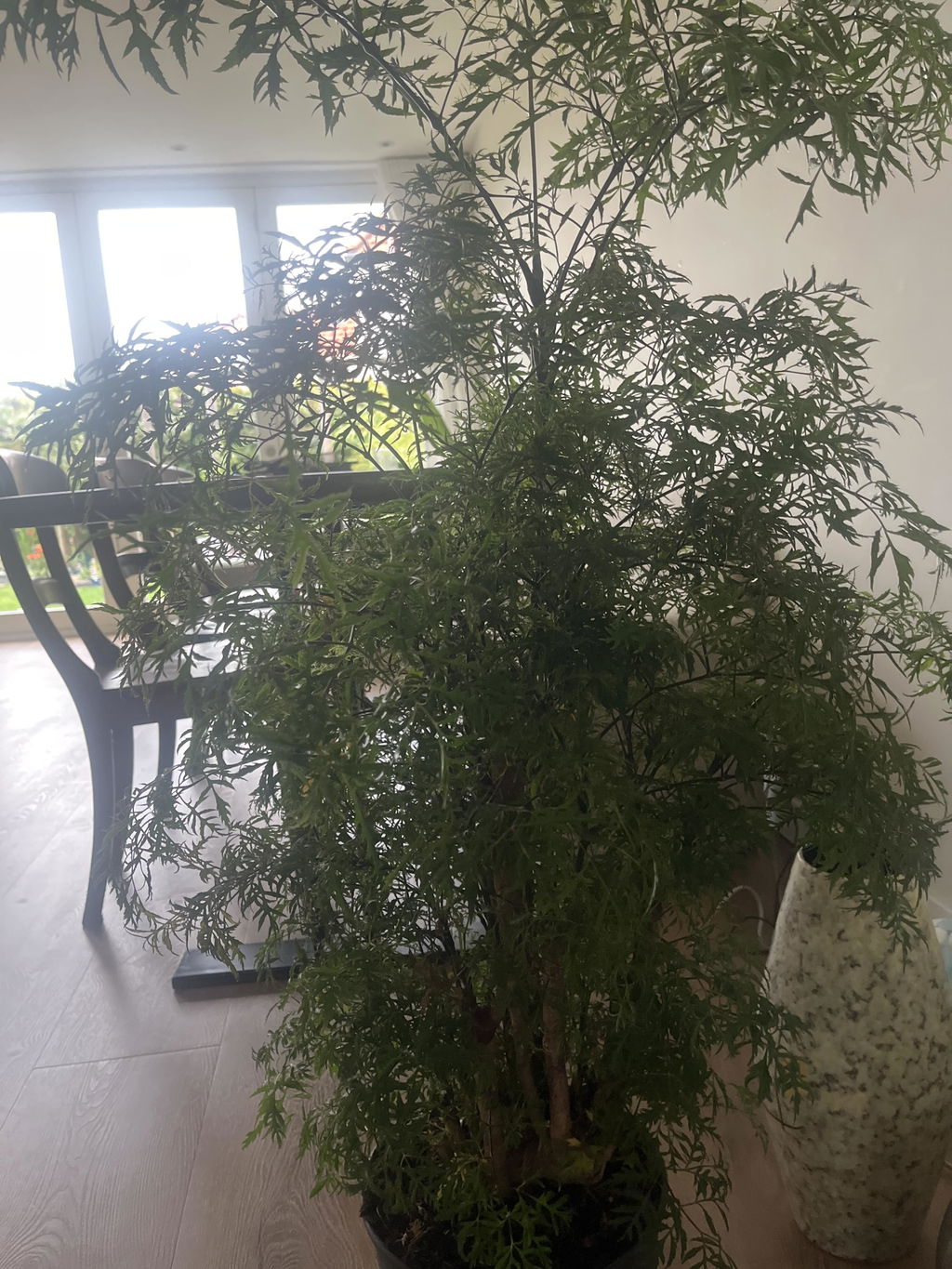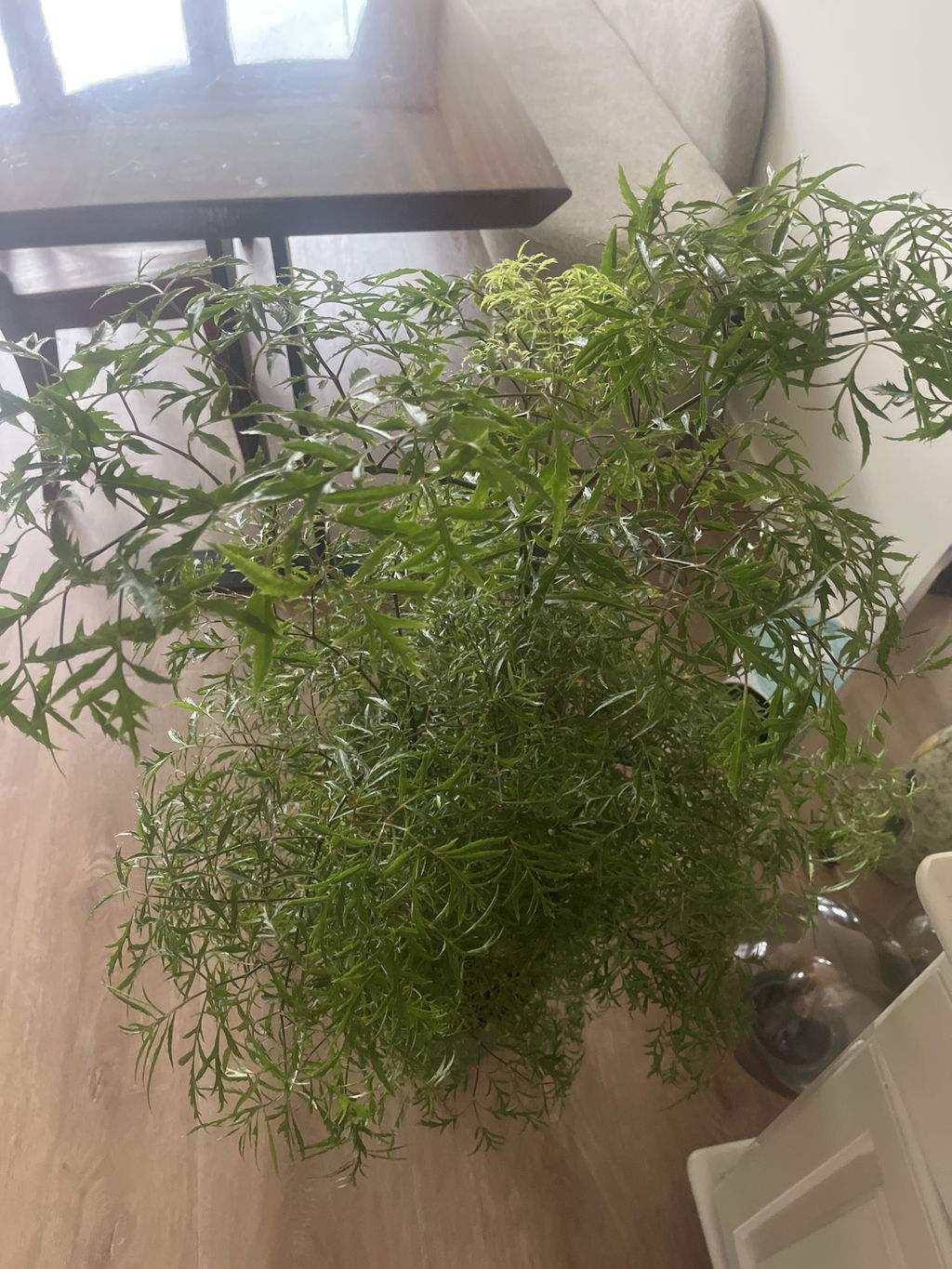



The Schefflera, better known in the Netherlands as the finger plant, is one of the most rewarding large houseplants you can bring home. With its elegant, hand-shaped leaves and sturdy growth it fills an empty corner in no time. In this guide you will read exactly how to keep this plant healthy and full, from the right spot to pruning and solving leaf drop.
The Schefflera in brief
In a hurry? These are the key care points at a glance.
- Light: bright, indirect light. Variegated types want more light, green types tolerate partial shade.
- Water: moderate. Let the top layer of compost dry out before watering again.
- Position: warm and draught-free, between 18 and 24 °C. Not in front of a cold, draughty door or above a radiator.
- Humidity: average. In dry winter air, occasional misting helps against spider mite.
- Pruning: possible all year round and makes the plant fuller and bushier.
- Toxic: mildly toxic to cats and dogs because of calcium oxalate. Keep it out of reach of gnawing pets.
Ready for a real eye-catcher? Take a look at our large Scheffleras in various sizes and varieties.
About the Schefflera and its origins
The Schefflera belongs to the Araliaceae family and occurs naturally in the tropical and subtropical regions of Asia, Australia and the Pacific islands. In the wild it grows into a substantial shrub or even a tree, which explains why it keeps growing so happily indoors and copes well with pruning.
The name finger plant refers to the leaves: several elongated leaflets that fan out from a single point like fingers, a little like an open hand or a parasol. That is also where the English nickname umbrella plant comes from. It is a plant that grows along with you and becomes genuinely impressive over the years. That is precisely why it is so popular as a large houseplant for the living room or the office.
Light and position
The Schefflera likes bright, indirect light best. A spot by an east- or west-facing window is ideal, or a few metres from a south-facing window. Harsh, direct midday sun can scorch the leaves, so avoid leaving the plant in full sun for hours.
Green varieties such as the Schefflera arboricola tolerate some partial shade perfectly well, although the plant then grows more slowly and a little sparser. Variegated varieties with yellow or cream markings need more light to keep their colour. If they get too little light, the variegation fades and the leaves turn uniformly green again.
Put the plant in a warm, draught-free spot with a temperature between 18 and 24 °C. Avoid cold draughts from an open door or window and do not place it right above a radiator, as sudden temperature swings are one of the main causes of leaf drop. Turn the pot a quarter turn now and then so the plant grows evenly towards the light and does not lean.
Watering
When watering the Schefflera, the main rule is: better slightly too dry than too wet. The roots do not like constantly wet soil and respond sensitively with root rot and leaf drop.
The rule of thumb is simple. Feel the compost with your finger and only water when the top two to three centimetres have dried out. Then water thoroughly until water runs out of the bottom of the pot, and throw away any excess from the saucer or cachepot. That stops the roots from standing in water.
In the growing period from spring to summer this often works out at about once a week. In winter the plant needs far less, sometimes only once every two weeks. Always go by the plant itself rather than a fixed calendar, as its needs depend on light, temperature and pot size.
- Too much water: limp stems, leaves turning yellow or brown and dropping, a musty smell from the pot.
- Too little water: limp, drooping leaves and leaf drop, dry and curling leaflets.
Preferably use water at room temperature. Ice-cold water from the tap can shock the roots.
Humidity
The Schefflera comes from a humid climate, but manages fine indoors at average humidity. So there is no need to buy a humidifier. That said, indoor air often becomes very dry during the heating season, and that makes the plant more susceptible to spider mite.
If you want to give it a hand, mist the leaves occasionally with lukewarm water, or stand the pot on a tray of wet clay pebbles. Keep the base of the pot above the water, so the roots do not end up sitting in the wet after all. Also wipe dust off the leaves regularly with a damp cloth. Clean leaves catch more light and stay healthier.
Feeding
During the growing period, roughly from March through September, give the Schefflera liquid feed for green houseplants every two to four weeks. Follow the dosage on the packaging and never apply fertiliser to bone-dry soil, as that can damage the roots. So moisten the compost lightly first.
In autumn and winter the plant barely grows and needs rest. Stop feeding during that period or cut it back to at most once a month. Too much feed builds up in the compost and does more harm than good.
Repotting, step by step
You repot a young, fast-growing Schefflera about every one to two years, and a large mature specimen every two to three years. The best moment is in spring, at the start of the growing season. Repotting is needed when the roots grow out of the bottom of the pot or the plant is clearly too cramped.
- Step 1: choose a pot about two to four centimetres wider than the current one. A far too large pot holds moisture for too long.
- Step 2: put a layer of clay pebbles in the bottom for good drainage and use fresh, airy houseplant compost.
- Step 3: carefully take the plant out of the old pot and loosen the root ball gently. Cut away damaged or black, soft roots.
- Step 4: place the plant at the same depth in the new pot, top up with compost and press down lightly.
- Step 5: water it and put the plant in a quiet, bright spot for a few weeks. Wait about four to six weeks before feeding, as fresh compost already contains nutrients.
Is the plant already very large and hard to repot? Then you can also replace just the top layer of compost with fresh soil. That gives the plant new nutrients without disturbing the whole root ball.
Pruning and making it fuller
The Schefflera copes well with pruning, and pruning is exactly what makes it more attractive. If the plant gets too tall, bare at the bottom or grows lopsided towards the light, you can happily step in. Pruning encourages the plant to form new shoots at the cut point, making it fuller and bushier.
Cut with clean, sharp secateurs just above a leaf or node. If you want to keep the plant more compact, cut back the longest, outward-reaching stems. Spring is the ideal moment, because the plant then has plenty of energy to shoot. The cut tips can, by the way, be used as cuttings to grow a new plant.
Do not let a Schefflera that has gone bare and straggly keep growing in the hope that it will sort itself out. A firm prune almost always produces a fuller, healthier plant in the long run.
Common problems
The Schefflera is tough, but its leaves make it very clear when something is wrong. Below are the most common problems with their cause and solution.
Leaf drop
Leaf drop is the Schefflera's signal that something has changed. Cause: often a move to a new spot, draughts, too cold a position or an irregular watering rhythm, both too wet and too dry. Solution: put the plant in a fixed, warm and draught-free spot and water regularly according to the rule of thumb. A little leaf drop after a move is normal. Give the plant a few weeks to settle in.
Yellow leaves
Cause: usually too much water, which puts the roots under strain. Sometimes a lack of light or a nutrient shortage also plays a part. Solution: let the soil dry out further between waterings and check that the pot drains well. If the plant is too dark, move it somewhere brighter. Feed it during the growing season if it has not been fed for a long time.
Sticky leaves
Cause: a sticky layer on the leaves or underneath them almost always points to sap-sucking insects such as mealybug or scale insects. That sticky stuff is honeydew, the excretion of these creatures. Solution: wipe the leaves with a damp cloth, remove mealybugs with a cotton bud dipped in a little alcohol and treat the plant with an organic control product if necessary. Repeat the treatment a few times with a few days in between.
Spider mite and mealybug
Cause: dry air, especially in winter, makes the plant vulnerable to spider mite (tiny spiders with fine webbing under the leaves) and mealybug (white, cottony tufts in the leaf axils). Solution: raise humidity by misting, rinse the plant under a lukewarm shower and treat stubborn infestations with a suitable product. Check the undersides of the leaves regularly, so you catch it early.
Root rot
Cause: persistently too much water and a pot that drains poorly, causing the roots to rot. Symptoms are limp leaves, a musty smell and black, soft roots. Solution: take the plant out of the pot, cut away all affected roots and repot into fresh, dry compost. Water carefully afterwards and from now on ensure good drainage with clay pebbles in the bottom.
Is the Schefflera toxic?
Yes, the Schefflera is mildly toxic. The plant contains calcium oxalate, crystal-like substances that can cause irritation of the mouth, throat and stomach if ingested. For people, it is mainly the sap during pruning that can cause some skin irritation, so wash your hands after pruning or wear gloves.
For cats and dogs the plant is mildly toxic. Nibbling the leaves can lead to drooling, vomiting and an irritated mouth. If you have pets or young children, place the Schefflera somewhere they cannot easily reach, for example a bit higher up or in a separate room. A large specimen with its leaves well above nose height is usually safest.
Popular Schefflera varieties
There are various Schefflera species, each with its own character. These are the best known ones you will come across indoors.
- Schefflera arboricola: the compact finger plant with smaller leaflets. Available in plain green and in variegated versions such as 'Gold Capella' with yellow-green markings. A rewarding, easy variety.
- Schefflera actinophylla: the large umbrella form with substantial, glossy foliage and long leaf stalks. A real statement plant that gets seriously big.
- Schefflera compacta: a more compact, sturdy grower with firm foliage, ideal if you want a fuller plant without it immediately filling the whole room.
- Schefflera with braided stem: specimens whose stems have been artfully braided together, for a decorative and well-groomed effect.
Curious which size and variety suits your interior? View the full range of large Scheffleras and find your favourite.
Frequently asked questions about the Schefflera
Why is my Schefflera losing leaves?
Leaf drop is usually a response to change: a new position, draughts, cold or irregular watering. Put the plant in a fixed, warm and draught-free spot and keep an even watering rhythm. After a move some leaf drop is normal and the plant recovers by itself.
How often should I water my Schefflera?
Water as soon as the top two to three centimetres of compost have dried out. In summer that is often about once a week, in winter considerably less. Always feel the soil first rather than watering on fixed days.
Can a Schefflera stand in the shade?
Green varieties tolerate partial shade, but then grow more slowly and a little sparser. Variegated varieties need bright, indirect light to keep their colour. A genuinely dark corner is not ideal for any Schefflera.
How do I make my Schefflera fuller?
By pruning. Cut the longest stems back just above a leaf or node, preferably in spring. The plant then forms new shoots at those points and becomes fuller and bushier by itself.
Is the Schefflera toxic to cats and dogs?
Yes, the Schefflera is mildly toxic to cats and dogs because of the calcium oxalate it contains. Nibbling can cause drooling, vomiting and mouth irritation. Keep the plant out of reach of your pets.
How big does a Schefflera get?
Indoors a Schefflera can easily reach two metres or more over the years, depending on the variety and the care it gets. Regular pruning keeps its height and shape well under control.
Can I put my Schefflera outside?
In summer it can stand outdoors in a warm, sheltered spot, out of the harsh midday sun and out of the wind. Bring it back inside in good time, well before night-time temperatures drop below about 12 °C, as it copes poorly with cold.
7. FAQ_SCHEMA